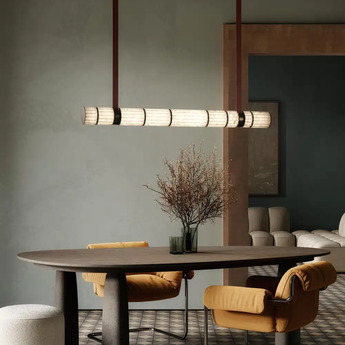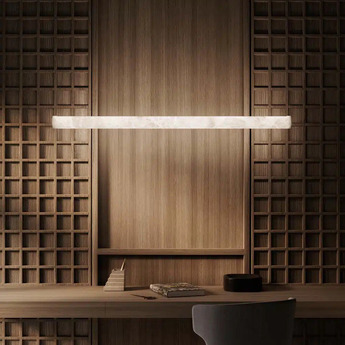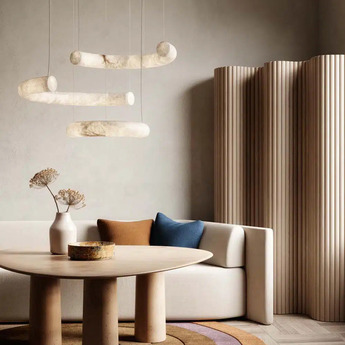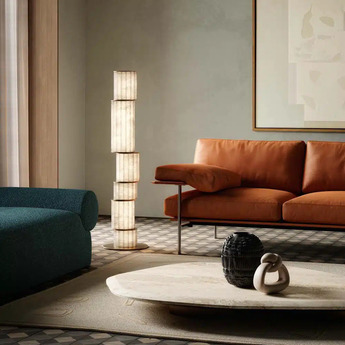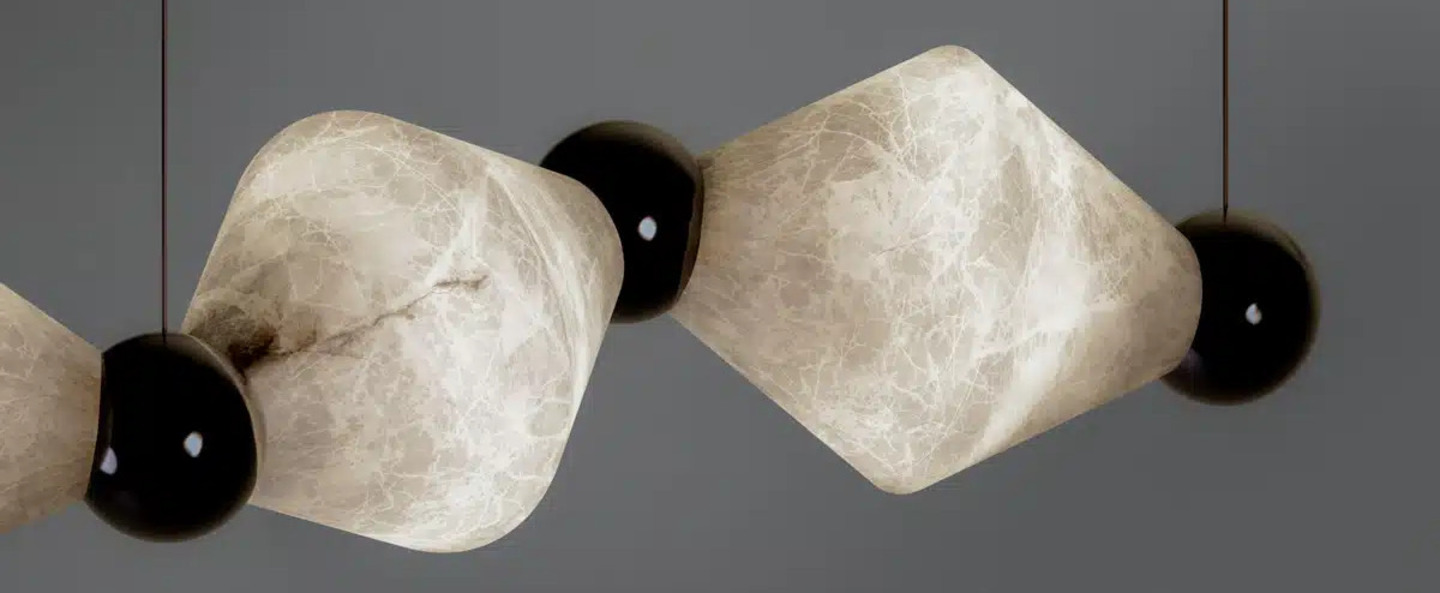
Alabastro Italiano Studio
- Nationality
- Italian
- Occupation
- Designers
Alabastro Italiano’s identity is shaped by a diverse network of international urban planners, designers, and architects, who are called upon to translate the nobility of this stone into cutting-edge spatial solutions.
Andrea Bonini:
Andrea Bonini, a designer born in Verona in 1985, embodies the very essence of Italian craftsmanship and refined elegance.
After graduating from the prestigious Istituto Marangoni in Milan, he founded his studio in 2014, demonstrating his unwavering passion for creating projects that touch the soul.
His career has been marked by collaborations with some of the most prominent brands in the luxury market, giving rise to award-winning collections celebrated in the pages of leading design and architecture magazines.
In 2019, Architectural Digest Italia recognized his exceptional talent by naming him among the “Seven for the Future,” designating him as one of the best designers under 35.
Bonini’s design philosophy is a symphony of sensual and refined atmospheres, where seemingly simple forms are meticulously crafted to evoke deep emotion. He masterfully blends forms, materials, and craftsmanship, bringing to life unique and sophisticated projects that transcend mere aesthetics.
His interiors are designed to be much more than mere spaces: they are immersive experiences that engage the senses and resonate with the soul. Bonini’s keen eye for detail allows him to transform striking images into innovative ideas, harmoniously blending conceptual development with a captivating sense of place.
His childhood in a region renowned for marble quarrying and craftsmanship, combined with a family legacy of metal artisans, profoundly influences his approach to design. He seamlessly integrates these materials into his projects, celebrating their natural beauty, imperfections, and the stories inherent in them.
Milan, the city that recognized his talent, has become his creative playground, where he draws inspiration from the artistic legacy of masters such as Carlo Scarpa, Franco Albini, and Christian Liaigre. His work bears witness to their enduring influence, imbued with the same timeless elegance and attention to detail.
With unwavering dedication, he personally oversees every aspect of his projects, collaborating with artisans to ensure that every detail is executed with meticulous precision. Bonini’s commitment to high standards of craftsmanship is evident in his interior design projects, which reflect a bespoke approach and a constant focus on meticulous craftsmanship.
His portfolio spans multiple continents, from cities in Italy and Asia to the sophisticated landscapes of the United Kingdom, the United Arab Emirates, and the French Riviera. Each project demonstrates his ability to translate his vision into tangible spaces that captivate and inspire.
Bonini’s studio, nestled in the heart of Via Montenapoleone in Milan, is a haven of refined design and creativity. It is here that he and his team meticulously craft projects that push the boundaries of contemporary aesthetics, resulting in unique and prestigious outcomes.
Andrea Bonini’s work is not merely design; it reflects his commitment to creating spaces that evoke emotions, inspire dreams, and elevate the human experience. His legacy will continue to shape the future of design, leaving an indelible mark on the world of luxury and refinement.
Barbara Covi:
A graduate of the University of Padua, Barbara Covi honed her professional experience in the United States, where she founded the COVI&PUCCIONI brand in 2015. The studio has collaborated with several designers to create decorative panels, mirrors, and furniture for major commissions in the United States and Europe. In 2018, she launched a new collection of mirrors characterized by a sophisticated color gradient effect. In 2021, she played an active role in the creation of Alabastro Italiano, designing its first collection of chandeliers.
In 2022, she collaborated with renowned street artist Bradley Theodore to create “BLOW,” a pair of mirrors featuring the artist’s iconic, signed skull. In 2023, she further expanded her production with furniture enhanced by bronze finishes, antique mirrors, and brass elements.
Giorgio Bonaguro:
Giorgio Bonaguro is a designer based in Milan and Rio de Janeiro, working between Italy and Brazil.
His work is rooted in a material-driven approach, exploring the relationship between architecture, the object, and the surface. Starting from the intrinsic qualities of materials—their weight, texture, and cultural significance—he develops projects that combine sculptural presence with functional clarity.
His practice spans from collection design to industrial production, maintaining a constant dialogue between cultural identity, artisanal craftsmanship, and contemporary design.
In collaboration with companies, galleries, and artisans, he develops collections and objects where material becomes a fundamental element in defining form.
Romani Saccani Architects:
The architectural firm ROMANI SACCANI ARCHITETTI ASSOCIATI was founded in 1999, the result of the professional collaboration between architects Michele Romani and Mauro Saccani, which began several years earlier during their shared educational journey—first as design students at the Public Art Institute of Monza, then as classmates during their architecture studies at the Polytechnic University of Milan (1998) as part of a joint thesis dedicated to the redevelopment and landscape enhancement of the historic site “Le cinque corti di Bernate” in the municipality of Arcore, which was recognized and awarded as a positive initiative by the Lombardy Region, as attested in 2009.
After working as freelancers with several architecture firms in the Milan suburbs and participating in various design and architecture competitions (in 1999, they won third prize in the competition for the renovation and expansion of the Ornago town hall with the project “Il cubo e la piazza”), they are now increasingly turning their attention to the product design sector and count among their clients numerous collaborations with design firms, in the lighting sector as well as in furniture and interior accessories.
Each of their new concepts arises from a conscious reinterpretation of the memory of the past and becomes an act of synthesis between imagination and reality, a challenge to the weight of norms and habits. The “simpler” the underlying idea, the more successful the project will be: “simplicity”—which never means banality—is thus understood as the ultimate form of elegance and a rejection of excess and vulgarity, as an essential and pure ability to convey the authentic meaning of things. A unique product, designed collaboratively but above all empathetic, as it is intended to evoke in the user a sense of emotional connection and affection through its use.